About District
- Location: Ramanathapuram is one of the 38 districts of Tamil Nadu, located in the southeastern part of the state, bordering the Palk Strait and the Gulf of Mannar. It is approximately 267 km south of Chennai.
- Area: Approximately 4,123 sq km.
- Latitude and Longitude: Roughly between 9°10′ and 9°55′ North latitude and 78°10′ and 79°20′ East longitude.
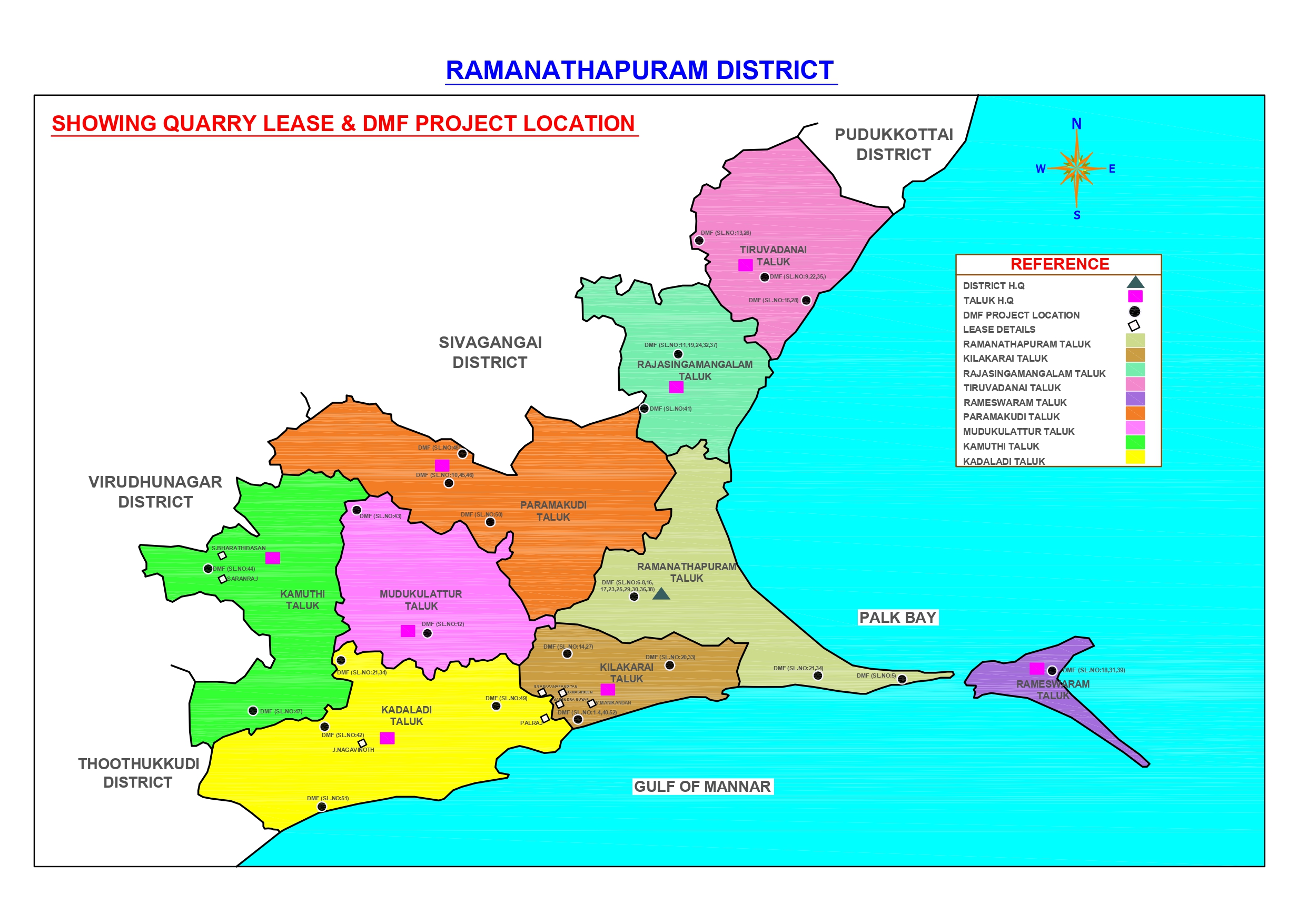
- Boundaries: It is bounded by the Bay of Bengal and Palk Bay in the east, the Palk Strait in the southeast, the Gulf of Mannar in the south, Thoothukudi district in the southwest, and Sivaganga and Pudukkottai districts in the north and northwest.
- Topography: The district is mostly a flat coastal plain with some inland areas having slightly undulating terrain. It has a long coastline with several islands, including Pamban Island (Rameswaram).
- Rivers: The Vaigai River flows through the northern part of the district. There are also several smaller rivers and seasonal streams.
- Climate: The district has a tropical climate. Summers (March-May) are hot and humid, with temperatures reaching up to 40°C. The monsoon season (October-December) brings moderate rainfall.


- Agriculture: Agriculture is the primary occupation, with paddy being the major crop. Other crops include cotton, pulses, chilies, and coconuts.
- Fisheries: Due to its extensive coastline, fishing is a significant economic activity. The Gulf of Mannar is a rich fishing ground.
- Industries: There are limited large-scale industries. Small-scale industries include salt production, fish processing, and handicrafts. Tourism is a growing sector, particularly due to the presence of Rameswaram.
- Natural Resources: The district has deposits of limestone, gypsum, and other minerals.
- Challenges: The district faces challenges such as water scarcity, soil erosion, and the impact of cyclones and other natural disasters due to its coastal location.
- Historical Significance: Ramanathapuram has a rich history, with connections to the Sethupathi dynasty, who ruled the region for centuries. The Ramanathaswamy Temple in Rameswaram is a major pilgrimage site and has historical significance.
- Formation: The district was formed in 1910 by carving out portions from Madurai and Tirunelveli districts.
- Administrative Divisions: The district is divided into several taluks (sub-districts) and blocks.
- Key Towns: Ramanathapuram (district headquarters), Rameswaram, Paramakudi, and Mudukulathur.
- Tourism: Rameswaram, with its famous temple and Pamban Bridge, is a major tourist attraction. Other places of interest include Dhanushkodi, Thirupullani, and the bird sanctuary at Kanjirankulam.